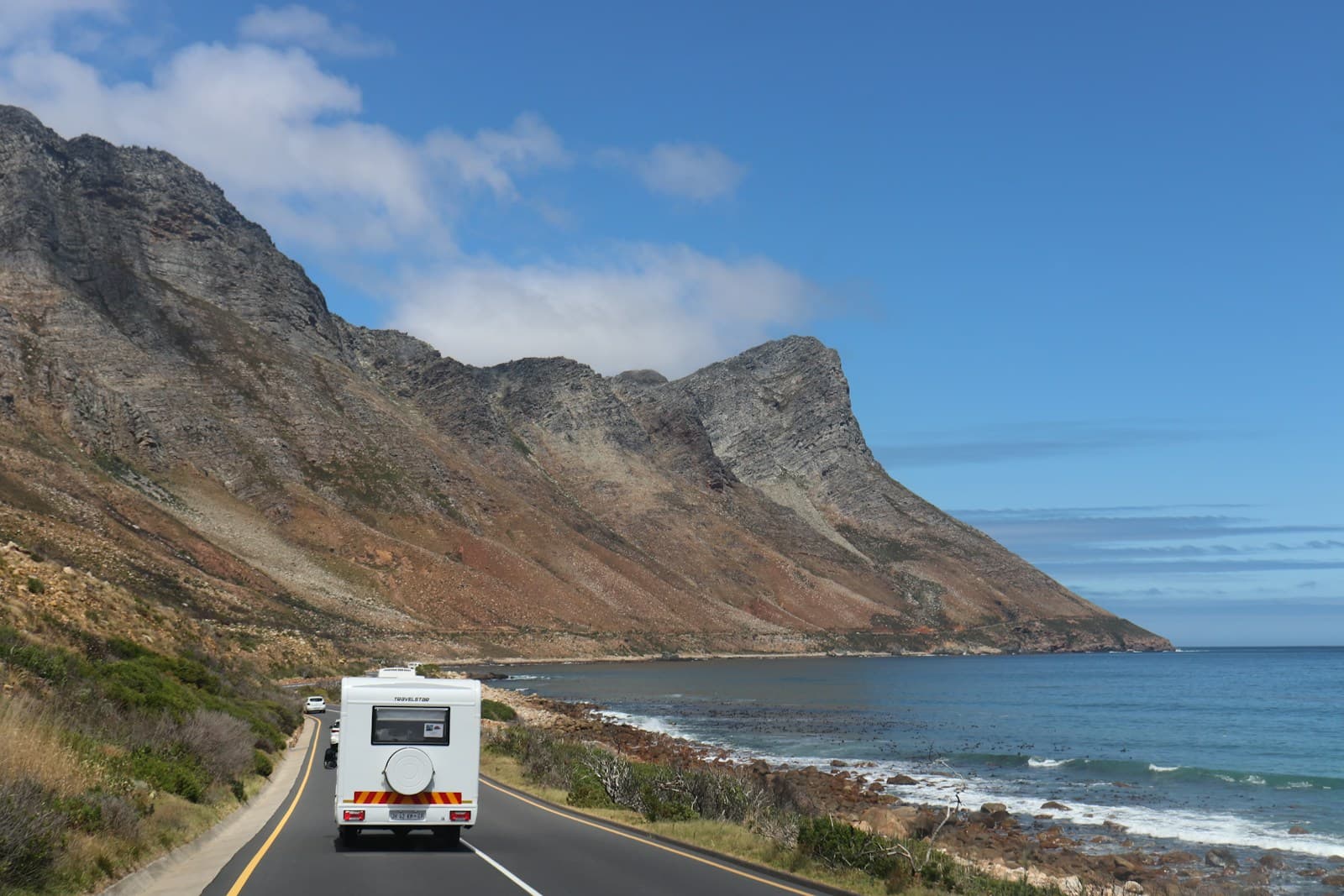
Driving on the east coast of Australia is not difficult. It is, for visitors from right-hand-drive countries, unfamiliar in ways you genuinely can't simulate in your home country, and that unfamiliarity shows up specifically in the three situations where people crash: roundabouts, night driving, and fatigue on long straight highways.
This is the honest driver's briefing the rental company doesn't give you.
The left-side thing
You drive on the left. The driver sits on the right. The indicator stalk is on the right, the windshield wiper stalk is on the left. You will wipe the windshield every time you want to indicate for the first two days. Everyone does. It's funny. Don't let anyone tell you it stops being funny. It does.
The part that takes longer to adjust to is lane positioning. In a right-hand drive car, your body sits on the right side of the lane, and it feels natural to hug the right side of the lane. You should actively put yourself closer to the centre line than your instincts tell you. Otherwise you'll drift into the shoulder, which on highways means gravel, potholes, and wildlife.
The hardest moment is your first right turn (a crossing turn, equivalent to a left turn in most of the world). You have to give way to oncoming traffic and merge into the far lane. Take your time. Every driver behind you has made the same turn.
Roundabouts
If you're not from the UK, Ireland, Australia, or New Zealand: roundabouts will be new to you. Australia has a lot of them, especially in regional towns where they replace lights.
The rules:
- Give way to traffic already in the roundabout (traffic from your right).
- Signal your exit direction as you approach.
- If going more than halfway around, stay in the inner lane.
- Do not stop in the roundabout.
The common mistake visitors make: stopping at the entry when no one is coming. There's no stop sign on an Australian roundabout entry, just a give-way. If the roundabout is clear, drive through.
The other common mistake: failing to signal the exit. Always signal left as you exit, even if you went straight through.
Kangaroos and wildlife
Kangaroos are not a highway hazard all day. They are a highway hazard at dawn, dusk, and at night. During the middle of the day, you'll see them but they won't be on the road.
The rule: don't drive the Pacific or Bruce Highway between 5pm and 8am if you can avoid it. If you have to, slow down 10 to 20 km/h from the posted speed in forested or rural stretches.
If a roo appears on the road: brake straight, do not swerve. Swerving to avoid wildlife is the cause of many east coast single-vehicle fatalities. Hitting a kangaroo at 80 km/h will damage the car. Rolling the car trying to avoid one will kill you.
Other wildlife you'll encounter: wombats (solid, immovable, at dusk), cows (on unfenced road sections inland), wallabies (smaller kangaroos, everywhere), emus (long legs, bad decision-makers). Same rule applies to all.
The Bruce Highway reality
The Bruce Highway runs from Brisbane to Cairns and is the main route for everything heading north in Queensland. It is mostly a single-lane-each-way rural highway with overtaking opportunities every 20 to 40 km.
What to expect:
- Road trains inland and in Central Queensland, triple-trailer trucks up to 50 m long. Overtaking one requires a proper overtaking lane. Do not attempt on a short straight.
- Weather. Wet season (Dec to Mar) regularly floods sections of the Bruce between Rockhampton and Cairns. Flooding can close the highway for days. Check the QLD Traffic and Travel Information Map before any long drive in summer.
- Fatigue. The section from Mackay to Townsville is where more fatigue-related crashes happen than anywhere else in QLD. It is long, straight, and boring, and drivers in the wrong mental state keep the accident rate up. Stop every 90 to 120 minutes. Actually stop. Get out of the vehicle, walk around, drink water.
- Overtaking lanes. When you get one, use it. Don't be polite and linger behind a truck if the lane is clear ahead. The next lane may be 30 km away.
The Pacific Highway (Sydney-to-Byron zone)
The Pacific has been upgraded to a divided motorway for most of its length north of Sydney now. It's a nicer drive than it was 15 years ago. The remaining hazards:
- Sydney and Newcastle tolls. You need an e-TAG or to register online. Rental companies usually include a tolls pass. Confirm before you leave the depot.
- Weather fog around Coffs and the mid-north coast in autumn mornings. Slow down; headlights on.
- The stretch from Taree to Port Macquarie has the highest fatigue-related crash rate in NSW. Stop at Forster or Taree if you've been driving more than 3 hours.
Tolls
Most east coast tolls are in Sydney and Brisbane. You need:
- An e-TAG or pass (Linkt, Transurban) for Sydney (M2, M5, Cross City, Lane Cove, Westconnex, Eastern Distributor)
- The same for Brisbane (Gateway, Go Between, Legacy Way, AirportLink)
If you're renting a van, the rental company usually handles tolls with a service fee ($3 to $5 per toll). If you're driving your own vehicle, open a Linkt account online before you drive into either city. You can register your plates after the fact within 5 days without penalty.
Wet season driving (far north QLD)
From December to April, Far North Queensland gets genuinely biblical rain. If you're driving north of Mackay in wet season:
- Never drive through flooded roads. "If it's flooded, forget it" is a literal government slogan in QLD. Water across a road is deeper than it looks and the surface may have washed out underneath.
- Check road closures at qldtraffic.qld.gov.au before any long drive.
- Cyclone warnings cancel everything. If a cyclone warning is issued for a coastal area you're driving into, change your plans. Move inland, stay put, or accept that your itinerary is disrupted.
Fuel strategy on the long drives
Don't let the tank drop below a quarter in Central Queensland between Rockhampton and Mackay, or between Townsville and Cairns. Servos are 80 to 150 km apart and some close at night. The last two sentences are how people end up walking with a jerry can.
Roadhouses and rest stops
Australian roadhouses are a particular experience. Typical roadhouse stops on the east coast route: Buladelah, Macksville, Gympie, Gin Gin, Marlborough, Bowen. You can always get coffee, fuel, a basic meal (quality varies), and public toilets. The big chain roadhouses (BP, Caltex, Shell) all have the same basic amenities.
Rest areas with toilets are listed on every paper map and in the navigation. Use them in preference to the roadside. Many stretches of east coast highway have "no stopping" zones for safety reasons.
Night driving
Avoid night driving in rural Australia unless you have to. If you do:
- High beams on except when oncoming traffic approaches
- Scan the road shoulders for eye-shine from wildlife
- Drop 10 to 20 km/h below the posted limit
- Stop at the first hint of tiredness. Micro-sleeps on long dark roads are the single biggest killer
The non-negotiable rules
- Phones. Handheld phone use while driving is $1,209 and 4 demerit points in NSW (2026 fine). Queensland is similar. Mounted phones for navigation are fine. Holding it is not.
- Alcohol. Zero tolerance for learners and provisional licences. For full licences, 0.05 BAC. Australian police RBT (random breath test) extensively and without warning. Don't.
- Seatbelts. Every passenger, every time. Fines apply to the driver for any unbelted passenger under 16.
- Speed. Speed cameras are ubiquitous and not always visible. The tolerance is functionally 0. Drive to the posted limit.
Insurance and excess
The insurance that comes with your rental has a standard excess (typically $3,000 to $8,500). The "excess reduction" package reduces this to a small amount. It costs $25 to $45 per day. We don't usually pay for add-ons but this one is genuinely worth it if:
- You've never driven on the left before
- You're driving a large van for the first time
- The trip involves any gravel or unsealed roads
It's ~$200 to $300 over a two-week trip. A single parking scrape without it can cost you $1,500. Easy maths.
:::ask-serge Ask Serge about: "I'm picking up my first ever campervan in Sydney on Friday, what should I practise before I hit the Pacific Highway?" :::
One thing rental companies won't say clearly
The number one cause of damage claims on east coast campervan rentals is reversing into things: low branches, bollards, posts, other people's vehicles at the campground. A 4-berth campervan has significant blind spots and the reversing camera is not a substitute for getting out and looking. Before reversing anywhere: pause, look, walk around the van once, then reverse. Four seconds saves you a $2,000 claim.