Swimming holes are the single best thing about east coast Australia you haven't already booked. Every coastal road between Sydney and Cairns has freshwater pools within a 30-minute detour: rainforest waterfalls, granite river holes, volcanic basalt plunge pools. Most are free. Most are empty on a Tuesday.
This is a ranked working list of the ones we actually send travellers to, from south to north, with the two honest conversations every swimming hole guide skips: when they're dangerous, and where there are crocodiles.
How we ordered this
South to north, grouped by region, not by quality ranking, because half the value of these is on-route access during a road trip. Each entry tells you how safe it is, when to avoid it, and what's nearby.
New South Wales
Wollangambe River, Gardens of Stone (Blue Mountains)
Two-hour drive west of Sydney. The Wollangambe is a slow river in a tight canyon of iron-red sandstone. You walk in from Mount Wilson, scramble down a scrub track, and float on a pool noodle for an hour between cliff walls. Cold year-round. Bring a shortie wetsuit if you're sensitive. Best summer to early autumn.
Safety: the river has a mild current. Do not attempt in wet weather. Flash flooding is the real risk in Blue Mountains canyons. Stick to summer, clear forecasts.
Protestors Falls, Nightcap National Park (Northern NSW)
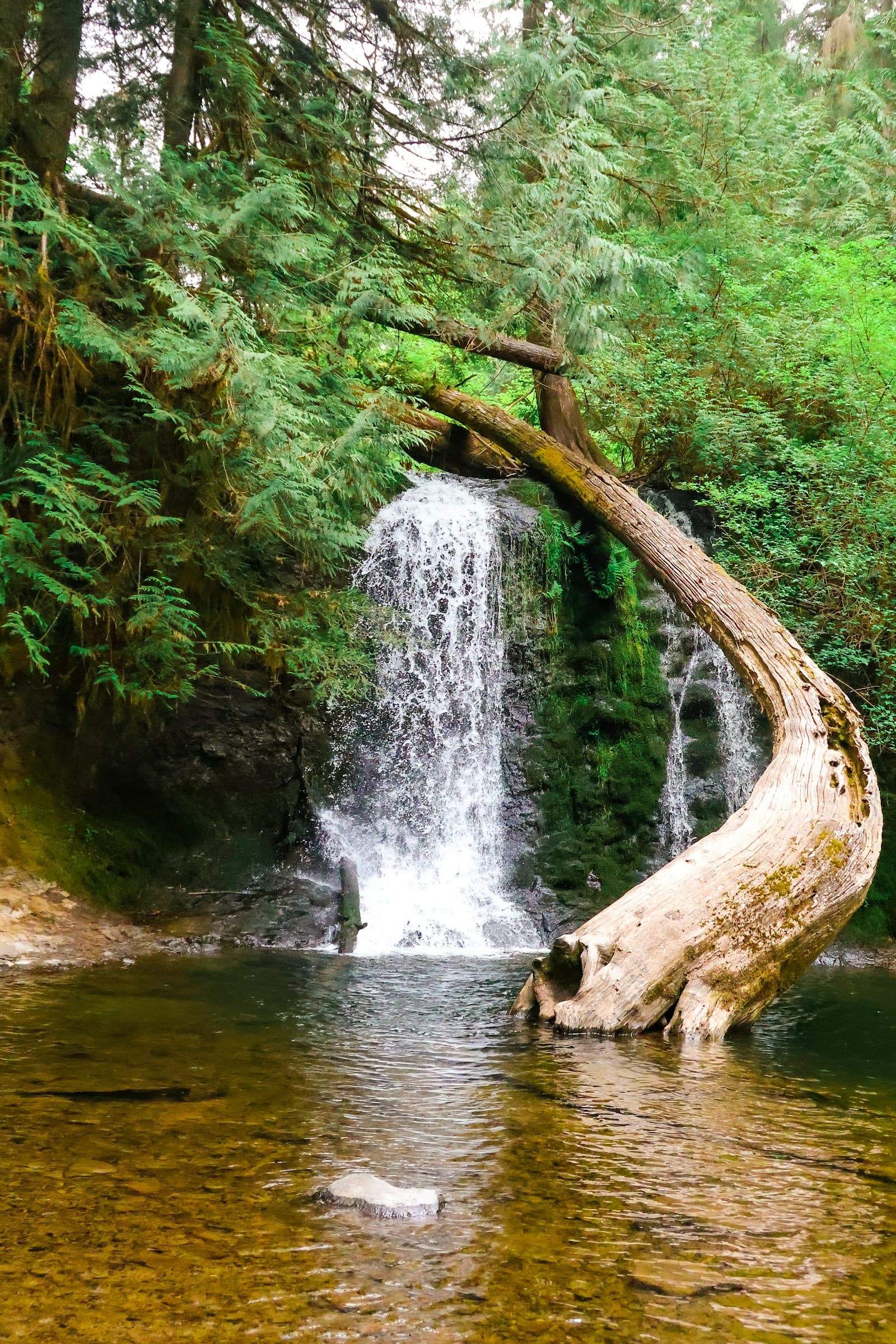
Short walk from the carpark in Terania Creek through old-growth rainforest to a single waterfall dropping into a wide shallow pool. Named for the 1979 logging protest that stopped the chainsaws. The water is cool, clean, and the pool is safe for kids and strong swimmers. Best after rain but not during.
Safety: swimming is officially discouraged from time to time to protect the endangered Fleay's barred frog. Obey the signs when they're up. They don't stay up long, and when they're down the pool is yours.
Minyon Falls, Nightcap National Park
Not a swimming hole at the falls themselves (100 m drop, unsafe base) but the creek below has two excellent quiet pools you can walk down to. The walk in is 7 km return and steep. Wear proper shoes. Take water.
Killen Falls, Byron hinterland
Fifteen minutes west of Byron. A short flat walk to a wide waterfall with a deep pool beneath and a cave behind the falls you can swim into. One of the best accessible swimming holes in NSW. Very busy on summer weekends. Go on a weekday, or go early. No fee.
Safety: rocks can be slick. Don't jump from the upper ledge. People have broken legs doing it.
Queensland, south-east
Natural Bridge, Springbrook National Park
In the Gold Coast hinterland. A creek has carved a hole through a cave roof and plunges into a pool below. You walk a 1 km loop to a viewing platform. Swimming is not permitted in the cave pool. Go at dusk in summer to see the glow worms light up the cave roof.
This is an observation stop, not a swimming stop. We include it because every traveller asks about it after Byron and the truthful answer is: look, don't swim.
Cedar Creek Falls, Mount Tamborine
Two pools below a small cascade, short walk from the carpark, very popular. Family-friendly, shallow edges. Best early morning in summer.
Wappa Falls, Sunshine Coast hinterland
Near Yandina. A wide rock shelf with a small waterfall dropping into a shallow swimming zone. Excellent for kids. Some pools further upstream are deeper. Free, often quiet on weekdays.
Safety: do not jump from the top of the falls. It looks tempting. People have died. The pool below is shallower than it looks.
Queensland, mid coast
Emerald Pools, Cania Gorge
Three hours inland from Bundaberg. Granite-lined creek pools in dry forest country, a different landscape entirely from the rainforest swimming holes further north. Less crowded, more of an expedition feel. Bring all your own water and shade.
Queensland, Far North (the crocodile line)
Everything below is north of the Tropic of Capricorn. The rule is: saltwater crocodiles inhabit rivers, estuaries, and coastal systems from approximately Gladstone northwards, with the serious crocodile country starting around Rockhampton. Freshwater crocs (not dangerous to humans) are common in upland rivers. Saltwater crocs (extremely dangerous) are found in any waterway connected to the sea at any point, and you should assume they're present unless a sign and local advice confirm otherwise.
The swimming holes below are in the Atherton Tablelands and upland rainforest, above salt croc habitat. They are considered safe. But never swim in any unmarked coastal or lowland river in the far north. Ever.
Josephine Falls, Wooroonooran National Park
South of Cairns at the base of Mount Bartle Frere. Granite boulders, a natural waterslide, clear cold water. One of the best swimming holes in Australia and it knows it. Busy in dry season. Go early morning or late afternoon.
Safety: slippery rocks. People have been swept over the falls in high water. Do not swim when the water is running high after rain. Signs are posted when unsafe; obey them.
Crystal Cascades, Cairns
Twenty minutes west of Cairns. Multiple swimming pools along Freshwater Creek accessed by a 1.2 km walking trail. Family-friendly, signposted, safe pools only. Avoid the upper pools labelled unsafe. Free, no fee.
Millaa Millaa Falls, Atherton Tablelands
The classic: single 18 m waterfall into a wide round pool in lush green. The Waterfall Circuit from here also takes in Zillie Falls and Ellinjaa Falls, all swimmable, all within 15 minutes of each other. Plan a half-day.
Safety: the pool at Millaa is deep and cold year-round. It shocks people. Enter slowly.
Babinda Boulders, south of Cairns
Granite pools in dense rainforest. Two zones: the main pool is safe for swimming, the downstream Devil's Pool is absolutely not and is signposted repeatedly. It has a bad safety record. Stay in the swimming zone.
The Cape (north of the Daintree)
Do not swim in any river or creek north of the Daintree River unless you have specific local advice. Saltwater crocodiles inhabit every waterway up there including some you wouldn't expect. The beaches are also unsafe, stingers and crocs. This is not a "don't swim here" because it's cold. This is a "people die" warning.
When to go (the wet season conversation)
Wet season (roughly Nov to Apr in QLD, Dec to Feb in northern NSW): Heavy rainfall, flash flooding, debris in pools, rivers running brown and dangerous. Waterfalls look their best but swimming is at its most dangerous.
Dry season (May to Oct in QLD): Lower water levels, clearer pools, less dramatic falls, much safer swimming.
The honest advice: if a sign says no swimming, or if there's been heavy rain in the last 24 hours, the locals aren't being over-cautious. The water is actually doing something dangerous you can't see from the surface.
:::ask-serge Ask Serge about: "I'm driving through the Atherton Tablelands tomorrow, which waterfalls are worth the detour and which ones are better to skip?" :::
What to pack
Thongs or reef shoes for rocks, a microfibre towel, a dry bag, a waterproof phone pouch, sunscreen, drinking water, and insect repellent (especially for the rainforest pools). Leave no trace. Pack out what you pack in. Don't use sunscreen before swimming in small pools. Even reef-safe products build up.